2026 Guide: Choosing the Right Auto Glass Repair Services in Vista
Homeowners in Vista, CA often search for auto glass repair services when windshield chips or cracks occur. This guide explains how to assess windshield damage, decide between repair and replacement, understand insurance and safety considerations, and choose a qualified service provider. Readers will learn practical decision criteria and steps to ensure a safe, cost-effective outcome.
Repair vs Replacement Overview
Minor windshield damage can often be repaired, while large or deep damage requires replacement.
- Definition: Repair uses injected resin to fill small chips or cracks; Replacement means removing the entire glass and installing a new one.
- Repairable damage: Chips about ¼ inch across or cracks shorter than a few inches (roughly the length of a dollar bill) can usually be repaired. Repairs restore strength and clarity.
- Replacement needed: Cracks longer than several inches, damage at the windshield edge or driver’s line of sight, deep breaches through both layers, or multiple cracks generally need full replacement.
- Risks of delay: Ignoring small chips or waiting can let cracks grow from heat, bumps or moisture, turning a simple fix into a full replacement.
- Safety impact: A properly installed windshield is critical to vehicle structure and occupant protection. Driving with compromised glass increases accident risk.
- Cost trade-off: Repairs are quicker and cheaper than replacements, but only when done early. Replacements cost more and take longer, especially on ADAS-equipped cars.
Repair or replacement should be decided promptly by assessing damage size, depth, and location. Even minor chips deserve quick attention to avoid long-term safety and cost consequences.
Windshield Repair Process
Windshield repairs involve cleaning the damage and injecting a bonding resin to restore the glass.
- Initial assessment: A technician inspects the chip or crack to ensure it meets repair criteria (size, depth, location). Clean the area thoroughly of dirt and moisture.
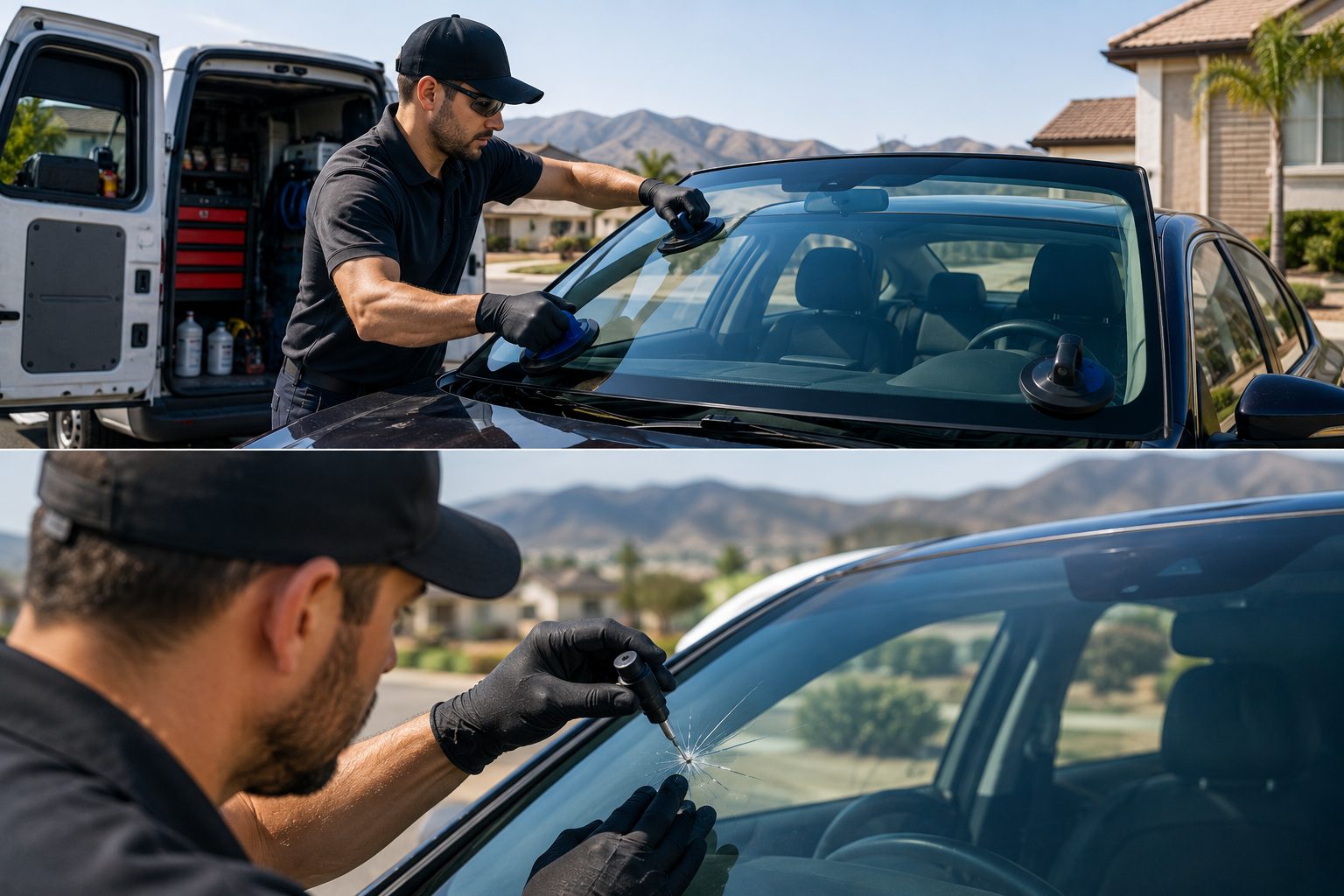
- Resin injection: A vacuum removes air from the crack, then clear resin is injected under pressure into the damage. The resin fills the void, then is cured with ultraviolet light.
- Tools and materials: Specialized repair kits use a low-viscosity resin and curing lamp. Professionals use calibrated pumps and light sources for best results.
- Limitations: Repair works only on superficial damage. It cannot fix deep cracks that penetrate multiple layers, large spread cracks, or damage at the extreme edge of the windshield.
- Mistakes to avoid: DIY fixes or cheap resins may leave distortions or weak spots. Always have a professional perform repairs to ensure full resin penetration and curing.
- Time and drive-away: A typical repair takes under an hour. In most cases, the car can be driven soon after, as resin cures quickly under UV light. However, technicians will verify the glass is fully set before releasing the vehicle.
- Real-world outcome: A properly repaired chip becomes much less visible and greatly reduces the chance of the crack spreading. Quick repair is almost always cheaper and safer than delaying until a full replacement is needed.
Professional windshield repair restores clarity and strength when done correctly. Skilled technicians use vacuum and resin to fill chips so that small damage becomes nearly invisible, preventing the need for later replacement.
Windshield Replacement Process
Windshield replacement is performed when damage is too extensive for repair.
- Removal of old glass: The damaged windshield is carefully cut out and removed without harming the vehicle’s paint or trim. Adhesive remnants are scraped off the frame.
- Surface preparation: The frame and bonding surface are cleaned, primed, and dried according to manufacturer standards. Proper adhesion requires a contaminant-free surface.
- Installing new windshield: A new windshield (OEM or aftermarket) is fitted and bonded with automotive-grade urethane adhesive. The glass is aligned precisely and pressed into place.
- Curing and drive-away time: The adhesive needs time to cure fully (often 1–2 hours or as specified). Until then, the windshield may not have full bond strength. Vehicles typically must wait the recommended time before driving.
- Calibration of sensors: After replacement, any cameras or sensors on or behind the windshield (e.g. rain sensors, lane-keep cameras) may require recalibration. This ensures ADAS systems work properly (see ADAS section below).
- Limitations: Replacement requires space and equipment. It’s sensitive to weather – rain or excessive heat during installation can interfere with adhesive bonding. Most shops have climate control, making in-shop replacement more reliable in bad weather.
- Mistakes and risks: Rushing installation or using incorrect adhesive can cause leaks, wind noise, or weak bonds. If not cured properly, the windshield could dislodge in a crash.
- Real-world consequences: A well-installed windshield restores full structural integrity. If done poorly, water leaks or weakened support can lead to interior damage, airbag deployment issues, and extra repair costs.
Full replacement takes longer and costs more than repair, but it is necessary when damage compromises safety. Proper technique and curing are essential – for example, following the “minimum drive-away time” ensures the adhesive has set before the vehicle moves.
Mobile vs In-Shop Service Options
Both mobile and in-shop glass services have advantages; the best choice depends on convenience and damage severity.
- Mobile service: A technician comes to your home or office with a fully-equipped van. It offers convenience, letting you keep your schedule while work is done. Many mobile services operate outside normal hours for flexibility.
- In-shop service: You drop off or schedule a visit to a glass shop. Shops have full equipment (large tools, vehicle lifts) and climate-controlled bays, so adhesives cure without weather interference. Shops often charge lower rates since there’s no travel fee.
- Convenience vs comprehensiveness: Mobile is ideal if your car can’t be driven or if you need minimal disruption to your day. In-shop is better if your schedule allows it, especially for major replacements. Shops may offer quicker turnaround if they have parts on hand.
- Weather and conditions: Extreme cold, heat, rain or snow can hinder mobile installations, since the vehicle must be outdoors during gluing. In those cases, in-shop replacement is safer.
- Complex repairs: If damage is extensive (multiple windows, body damage) or if ADAS calibration is required, in-shop service may be preferable, as technicians have more resources.
- Costs: Mobile service often adds a travel fee, making it slightly more expensive. In-shop service can be cheaper per job, though you must transport the vehicle. Insurance companies sometimes cover in-shop replacements more readily due to lower costs.
- Mistakes to avoid: Don’t choose mobile simply for speed if weather is poor or if the car has complex electronics. Similarly, don’t overlook the convenience factor if shop waits will disrupt important plans.
- Real-world example: A busy parent may use mobile repair to fix a small chip during the workday, but choose in-shop service for a large crack replacement before a road trip.
In summary, mobile repair trades some speed and convenience for a controlled environment. For small damage or immobile cars, mobile is a practical choice. For large replacements or ADAS recalibrations, taking the car to a shop usually ensures a more thorough service.
Insurance Coverage and Claims
Most auto insurance policies cover glass damage, but details vary by provider and plan.
- Comprehensive coverage: Windshield repair/replacement is typically covered under comprehensive (non-collision) insurance. Many policies waive the deductible for glass claims or offer a very low one.
- Claim process: Start by contacting your insurer. An agent or adjuster will verify coverage and whether you owe a deductible. Often they will guide you to a provider in the insurer’s network, though you usually have the right to choose any qualified shop.
- Insurance steering: Some insurers have preferred glass shops and may steer you there. This can simplify the claim but might limit your choices. State laws in some areas protect drivers from being forced to a particular shop. Always ask if you can use your preferred service.
- Shop assistance: Reputable glass shops often handle the claim paperwork for you. They can bill the insurance directly and ensure all required information (like proof of calibration) is submitted. This convenience saves you time and hassle.
- Coverage limits: Insurance may have guidelines (e.g. not covering large cracks without deductible). Know your policy terms. If you pay out-of-pocket, you can use any glass and tech you want.
- Mistakes to avoid: Failing to report damage promptly can breach policy conditions. Also, using a non-network shop without permission could result in a higher out-of-pocket cost. Confirm coverage details before proceeding.
- Real-world note: Many drivers find that using insurance for windshield service is cost-effective, as glass is a safety item. For example, California law requires insurers to cover windshield claims with no deductible if using qualified installers.
Understanding your insurance coverage ensures you won’t be surprised by costs. If insurance covers the repair, it is often financially sensible to use it, but still verify that the chosen shop meets quality and calibration standards.
Choosing a Qualified Auto Glass Service
Selecting the right repair shop means focusing on training, quality, and reputation rather than just price.
- Certifications and training: Look for technicians certified by recognized bodies (e.g. Auto Glass Safety Council). Certification indicates they’ve been tested on proper installation and safety standards. An AGSC-accredited shop follows industry best practices.
- Experience and reputation: Choose shops with years of experience and positive customer reviews. Online ratings (Google, Yelp) give insight into service quality and reliability. High ratings suggest consistent workmanship.
- Warranties and guarantees: A reputable shop will offer a warranty on labor and glass. This covers installation defects or leaks. (For example, many offer lifetime warranties on installations.) Avoid shops that do not provide a clear warranty.
- Quality of materials: Ask if the shop uses OEM-equivalent glass. High-quality aftermarket glass meets safety standards, but OEM glass has the exact factory specifications, which is important for ADAS-equipped vehicles.
- Transparency and communication: The technician should clearly explain the work, including how much time adhesive needs to cure and whether your safety systems will be recalibrated. Shops with integrity will answer questions and admit if issues occur.
- Avoiding mistakes: Don’t select purely on lowest cost. Extremely low prices may mean shortcuts. Verify that the quoted price includes all fees (mobile service, calibration, etc.).
- Local considerations: If you searched for Auto Glass Repair in Winchester, CA, remember that nearby Vista, CA shops may serve you as well. Focus on credentials and service quality wherever you go.
By prioritizing trained technicians, strong guarantees, and good reviews, you improve the odds of a safe repair. Remember that a properly installed windshield is critical for crash safety, so choosing a capable shop is as important as the price.
Cost, Time, and Warranty Considerations
Auto glass repair costs vary widely based on damage, vehicle, and service choices.
- Repair costs: Small chip repairs often run under $100–$150 out of pocket. Replacements range broadly – for a typical car, expect roughly $200–$500 for a standard windshield without ADAS. Luxury or ADAS-equipped vehicles can exceed $1000–$1500.
- Insurance impact: If filing through insurance, you may pay only your deductible. Many auto policies cover windshield glass with no or low deductible. Paying cash can avoid increases in premium for minor claims.
- Timeline: A simple chip repair usually takes less than an hour. Full replacement typically takes a few hours plus cure time (often one to two hours) before it’s safe to drive.
- Drive-away time: Follow the shop’s guidance. For safety, keep the doors closed until instructed. Opening doors too soon can break the new seal. (Some manufacturers specify, for example, a one-hour wait for adhesive strength.)
- Warranty details: Check what the warranty covers – it should include leaks and bond failure. Warranties may last from 90 days to lifetime. They protect against faults in installation or material.
- Budgeting trade-offs: OEM glass costs more than aftermarket. A high-end car or one with heads-up display may benefit from OEM, but aftermarket glass can be a cost-effective, safe choice for many vehicles.
- Delaying costs: Postponing service often makes the repair costlier (small cracks can require full replacement later). Also, a delayed repair means more time driving in an unsafe condition.
- Real-world example: During rainy seasons, wait times for replacement slots may increase. Budget extra days if storms or high demand are present. Plan repairs before critical trips to avoid delays.
Knowing typical costs and timelines helps set realistic expectations. Always verify whether the quote includes all fees (travel, calibration, extra sensors) and confirm how long the warranty lasts.
Advanced Safety Systems (ADAS) Recalibration
Modern vehicles often require recalibration of safety features when glass is replaced.
- What is ADAS: Advanced Driver Assistance Systems (ADAS) include features like lane-keep assist, adaptive cruise control, and automatic braking. Cameras and sensors for these systems are often mounted on or behind the windshield.
- Why recalibration matters: Even a slight shift in the new windshield’s position can misalign camera/radar. Without recalibration, systems may read lane lines or obstacles incorrectly, causing false alerts or failing to activate. This compromises safety features.
- Process: Recalibration can be static (in the shop with targets and tools) or dynamic (driving on a road under controlled conditions). The shop will use the method specified by the vehicle maker.
- When required: Most manufacturers require ADAS calibration after windshield replacement. Skipping it can void safety systems’ warranties and even violate regulations.
- Time and cost: Recalibration typically takes extra time (up to an hour or more) and can add cost (e.g. $300–$600 at a shop). Some high-end cars or dealerships may charge more. Many insurance policies will cover calibration as part of a glass claim.
- OEM glass: Original-spec windshields match the thickness and optical clarity the cameras expect. Using non-OEM glass on ADAS vehicles may necessitate repeated calibrations or cause faults.
- Mistakes to avoid: Don’t dismiss calibration as unnecessary. If a shop says calibration isn’t needed for your new windshield, that’s a red flag. Verify that the shop has the proper equipment and certifications for ADAS work.
- Real-world scenario: After a replacement, the service provider should confirm that lane-keeping and emergency braking systems are functioning correctly. If you notice odd behavior (like drift warnings when centered), return for additional calibration checks.
For vehicles with safety cameras, ADAS recalibration is as critical as the glass installation itself. Ensuring this step is done correctly keeps advanced safety systems reliable after a windshield service.
Conclusion
Choosing the right auto glass repair service means balancing damage assessment, cost, and expertise. By understanding repair versus replacement criteria, checking certifications and warranties, and considering insurance and ADAS needs, Vista and Winchester drivers can make informed decisions.
Lowest Price Auto emphasizes that following these practical guidelines helps ensure safe, reliable glass repairs and replacements.